As our demand for powerful processors rises, our need for a solution outside classical computing mounts. Quantum computing could help solve some of the more complex problems plaguing us. With quantum computers, we could map complex climate systems, solve impossibly complex encryption puzzles, and simulate advanced chemical processes. And this is just the tip of the iceberg.
As a result, there is an international race to arrive at a scalable, commercial quantum computer. Researchers all over the world are working diligently to find the perfect material to harness the power of a quantum bit, or qubit.
How does a quantum bit differ from a normal bit? In a classical computer, bits have discrete states. These bits are either 0 or 1. A pulse of energy, either in the form of 0 -- which is not the same as a complete lack of electrical impulse -- or a 1, is sent through transistors. These strings of zeroes and ones are simply instructions to the hardware. A string of these commands make up a byte. A string of bytes make up kilobytes, megabytes, gigabytes, terabytes and so on and so forth.
The software your computer uses is equipped to translate the commands supplied by a stream of bits. So, when a programmer creates a program in C++ or Java, for example, the words and phrases and mathematical equations she uses can all be reduced to zeroes and ones.
As you have probably already surmised, for the most part, a bit can be either one or the other: 1 or 0. There are two choices and no more. This is why coding in ones and zeroes is often referred to as binary code, and where the name bit, which stands for binary digit, comes from.
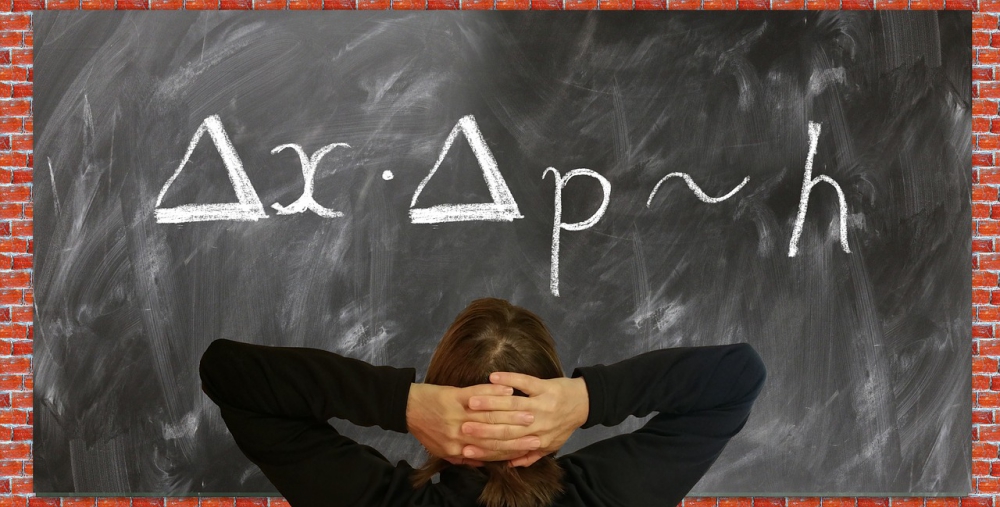
In quantum mechanics, there is something called superposition. Many are familiar with the famous Schrödinger's Cat thought experiment, in which an unseen cat is both alive and dead at the same time. In our everyday physical world, this idea does not make too much sense. A cat is either alive or dead. In other words, organic life is binary. Classical physics and classical computers follow this logic. They live in a binary world.
Qubits, however, are not bound to binary. Qubits can be either 0 or 1, or a combination of those states. This is the principle of superposition at work.
“A qubit can be thought of like an imaginary sphere,” writes Abigail Beall for Wired. “Whereas a classical bit can be in two states - at either of the two poles of the sphere - a qubit can be any point on the sphere.”
What’s so intriguing about qubits is their interactions with each other. In quantum computing, the sum is much larger than its individual parts. “Every time I add a quantum bit to a quantum computer, I double the computational power,” explains Michelle Simmons, the lead quantum researcher at the University of New South Wales, in a recent talk. “It’s predicted that… a 30-qubit computer... will be more powerful than the world’s most powerful supercomputer.” These quantum computers would be powerful enough to run sophisticated AI programs that could disrupt finance, medicine, and engineering industries.
To put this 30-qubit figure in context, IBM is, at present, leading the charge with a 16-qubit chip. “IBM Q has successfully built and tested two of its most powerful universal quantum computing processors to date,” IBM boasts. “16 qubits for public use and a 17-qubit prototype commercial processor.”
IBM, Microsoft, and Google are making these qubit chips by submerging superconductors in subzero temperatures. Simmons and her team are simply imprinting atoms in silicon. Other researchers have taken a more rigorous approach. They applied the theory of time crystals, an idea proposed in 2012 by Nobel laureate Frank Wilczek, to build their quantum technologies.
The University of Maryland and Harvard University synthesized time crystals in their own research labs, using disparate approaches. In University of Maryland’s system, they use an ion trap system to form patterns in time. Harvard exploited flaws in diamonds, a spatial crystal, to synthesize a discrete time crystal of their own.
What could these sci-fi-sounding time crystals be used for? “Time crystals,” Wilczek said in a recent presentation to university students, “are just what the doctor ordered for this technology.” Indeed, quantum computers are sensitive and require a very precise global clock, a potential use for the new type of matter. Further, time crystals could be used for information tasks and quantum memory.
Qubits, superconductors, and time crystals. As far-flung as the future of quantum computing may appear to be, it is likely closer than you think. We need more computationally complex machines to power our most pressing problems. Quantum computers could lead us to some very compelling solutions.
About the author: Josh Althauser is an entrepreneur with a background in design and M&A. He's also a developer, open source advocate, and designer. You may connect with him on Twitter.
Edited by
Ken Briodagh