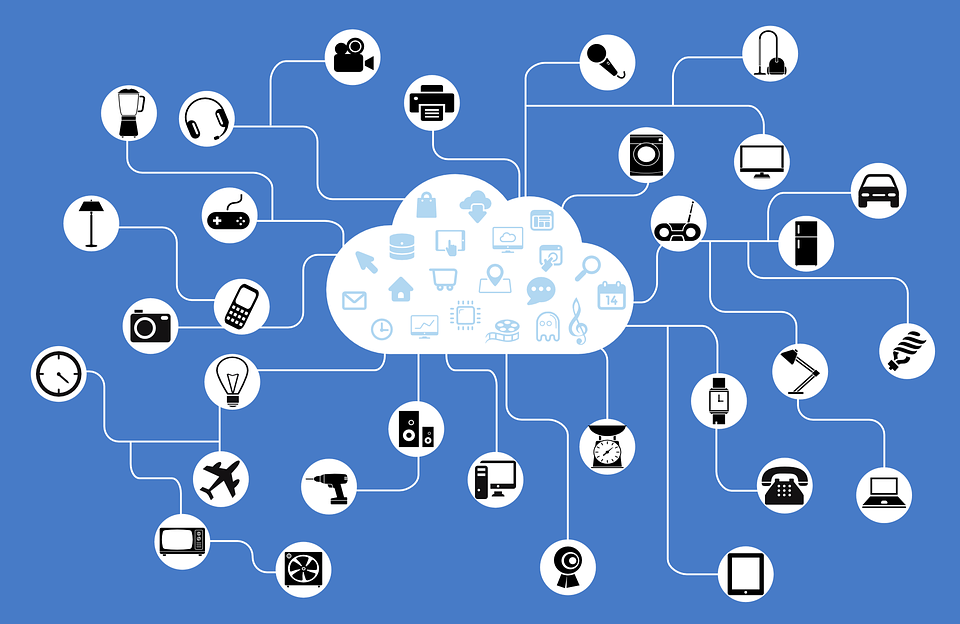
In less than a decade, the dominant AIoT pattern has flipped. In 2016, the loop was simple: sensors pushed data to the cloud, dashboards lit up, and humans decided what to do next. In 2026, the loop is sensors → edge intelligence → AI agents → automated action, with the cloud acting more as strategic brain than real-time nervous system. This shift is not just about faster chips or fancier models; it is about redesigning physical operations, so decisions happen where latency, bandwidth, and risk actually live—on the factory floor, in the vehicle, inside the grid, and at the cell tower edge.
What is happening is that data is being disaggregated and parsed to the specific dataflows based on specific system requirements. System disaggregation makes it possible to send each type of data to its own processing unit. So, while one-unit deals with traffic insights, another works on environmental data. Together, they create a symphony of efficient decision-making for urban planning and resource management.
Edge intelligence as the new default
Edge AI has moved from an interesting optimization to the default design choice for serious AIoT deployments. Manufacturing CTOs now report that edge-based predictive maintenance can cut unplanned downtime by up to 40 percent through real-time anomaly detection on machines, not in distant data centers. Healthcare systems are embedding diagnostic AI directly in imaging equipment and monitoring devices, accelerating clinical workflows while keeping regulated patient data on-premises. Automotive platforms process terabytes of sensor data locally in vehicles, making advanced driver-assistance and autonomous features viable without saturating networks or risking cloud-latency failures.
This edge shift is not just about latency; it is also about resilience and cost. Enterprises are using disaggregated architectures to process IoT data closer to the source, offloading bandwidth-heavy analytics from the cloud and reducing infrastructure spend by double-digit percentages in some industrial and smart-city deployments. Operations continue even when connectivity is degraded, because the decision logic sits on gateways, base stations, and embedded devices that can run autonomously until sync is restored. For AIoT architects, the question is no longer “can we push this to the edge?” but “what still truly belongs in the cloud?”
As our friend Jack Gold pointed out CES this week could have been renamed the “Chips Electronics Show. That is because specialized chips are impacting agentic solutions. Here is where we see the greatest impact.
- Neural Processing Units (NPUs) are becoming standard in edge devices. They handle AI tasks while consuming minimal power. Specialized AI chips and NPUs are used in:
- Manufacturing: Quality inspection cameras on assembly lines run computer vision models locally. A defect detection system at an automotive plant processes thousands of parts per hour without sending image data to servers.
- Healthcare: Portable ultrasound devices perform real-time image analysis during field diagnoses. Continuous glucose monitors analyze blood sugar patterns directly on the device, alerting diabetic patients immediately.
- Smartphones: Your phone's camera uses NPUs for real-time face detection, night mode processing, and computational photography, all without internet connectivity.
- Industrial IoT: Vibration sensors on oil rig equipment analyze acoustic patterns to predict bearing failures. These sensors operate for months on battery power in remote locations.
Connectivity: from pipes to policy
Underneath this, connectivity has quietly become a strategic policy decision rather than just a bill of materials line item. Low-power wide-area networks such as LoRaWAN and NB-IoT are enabling massive sensor deployments in utilities, logistics, and agriculture by combining multi-year battery life with inexpensive, wide-area coverage. Examples range from smart agriculture, where LPWAN-connected soil and weather sensors optimize irrigation and fertilizer use, to smart metering infrastructures that provide near real-time consumption data for water, gas, and electricity. At the same time, 5G—particularly in industrial profiles—is unlocking remote operation of heavy machinery, time-sensitive control loops, and high-bandwidth video analytics with latencies in the single-digit millisecond range.
Embedded in this shift in data flow are the internal metrics associated with which enterprises are no longer trying to manage connectivity through their service providers, but under an internal management requirement to control the connectivity, device and orchestration of their edge devices all from a single pane of glass.
The result in 2026 is a hybrid model where serious AIoT platforms are connectivity-agnostic by design. Enterprises combine LPWAN for cheap, massive telemetry; public or private 5G for high-value control and video; and Wi-Fi or wired links for local backbones, often orchestrated through eSIM-enabled global MVNO offerings. This abstraction of the network layer matters because AI agents and edge workloads now move across bearers as business rules dictate—prioritizing reliability and cost for some data, ultra-low latency for others. Connectivity choices increasingly sit on the same decision table as cloud vendor selection and security posture, especially in regulated sectors and cross-border deployments.
AIoT as a system design problem
What ties the edge and network story together is a deeper architectural shift: AIoT is now a system design problem, not a “stick an ML model on it” problem. Disaggregated computing architectures separate data capture, edge processing, AI workloads, and cloud analytics so each layer can scale, be secured, and be optimized independently. Edge nodes handle real-time anomaly detection, control, and local optimization; regional or telco edge sites aggregate and coordinate; central clouds store history, retrain models, and run long-horizon planning.
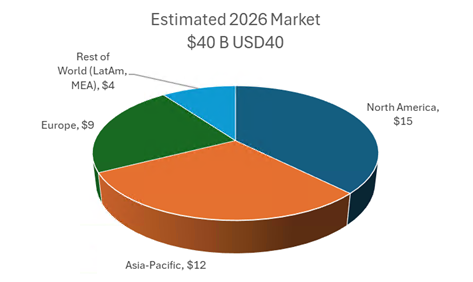
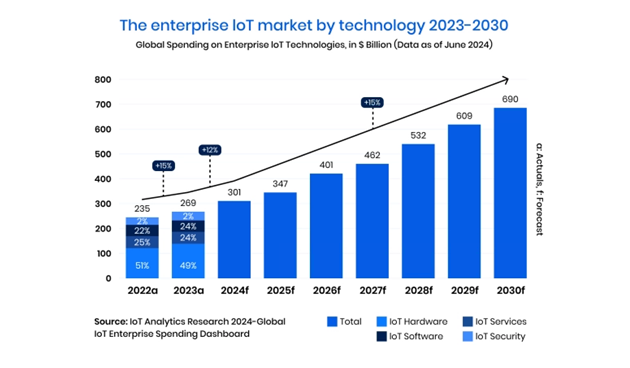
This layered approach is especially visible in energy, utilities, and industrial environments. IoT trend analyses for 2026 show the highest enterprise deployments clustering in electricity, gas, water, and waste management, with connected vehicles and infrastructure following close behind. In these sectors, AIoT deployments need deterministic behavior, regulatory compliance, and multi-decade asset lifecycles, which makes loosely coupled, modular architectures far more attractive than monolithic stacks. System disaggregation also answers a governance question: it becomes possible to audit what ran where, with which models and data, when regulators or incident investigators ask.
The rise of agentic AI atop AIoT
Overlaying this infrastructure is a new runtime: Agentic AI. Industry outlooks for 2026 describe a turning point where AI agents move from pilots to mainstream integration across enterprise workflows, including those rooted in IoT telemetry. Analysts forecast that a significant share of global enterprises will have AI agents embedded throughout business functions by the middle of the decade, fundamentally changing how operations, planning, and frontline work are orchestrated. These agents do not just summarize sensor data; they initiate work orders, adjust process parameters, reroute logistics, and escalate exceptions according to learned policies and constraints.
For AIoT, this means the stack now looks like: devices and sensors generating continuous data; edge intelligence cleaning, fusing, and interpreting it; and domain-specific agents turning those interpretations into actions, often without human intervention in the normal path. In smart factories, agents can coordinate maintenance schedules, inventory levels, and quality thresholds across fleets of machines, interacting with humans mainly when confidence is low or impact is high. In transportation and logistics, agents optimize routing, energy use, and service levels based on real-time telematics, weather, and demand signals coming from AIoT-instrumented fleets. The cloud in this picture becomes the training ground and governance layer for agents, not the place where every decision is made.
What changes for buyers and builders in 2026
For buyers of AIoT solutions, 2026 shifts the evaluation lens. Instead of asking only “what insights do we get?”, decision-makers now have to ask three harder questions: where do decisions actually run, how does data flow across edge, network, and cloud, and which agents are allowed to act on their own versus merely recommend. Market outlooks emphasize that organizations which fail to prepare high-quality, AI-ready data and modernize infrastructure for agentic workloads will struggle to scale these systems and could see productivity losses relative to peers. In regulated contexts—energy, healthcare, public services—those questions become intertwined with compliance and public trust, not just ROI.
For builders—vendors, integrators, and internal platform teams—differentiation in 2026 lives in three places. First, verticalized agents that understand specific operational domains (like grid balancing, fleet safety, or plant uptime) and can work within sector-specific constraints. Second, robust data and MLOps pipelines that span constrained devices, intermittently connected gateways, and multi-cloud backends without losing observability or governance. Third, connectivity-agnostic designs that treat networks as programmable, policy-driven resources rather than fixed plumbing. The winners in AIoT will not simply be the ones that “add AI” to devices, but the ones that architect for a world where edge intelligence and agents are first-class citizens in how physical operations run.
Conclusion
These trends are visible in the market, and I do not believe trend lines indicate a maturing of strategic planning yet. Many friends are talking about Humans in the Loop and while I believe agentic can manage corrections directly without supervision, I think trend lines and more importantly muscle memory can only be transferred to smart machinery to the point of direct cause and effects. At some point there is going to be a new phase of cognitive AI where unintended consequences are going to impact the cognitive AI trends are large language data sets will be repurposed on analyzing the enterprise agentic solutions as a whole. But that’s a trend I think we will get to before several lessons will have to be learned in poor prioritization.
For example, a well-known sausage company retooled its production and was able to reduce production time. Having implemented their new solution, they noticed a drop in sales. The reason was that the color of the sausage was blanche and not the normal red/pinkish color. When they went back and reviewed their process, they discovered that at one stage in the former production there was a wait time where the sausage aged before packaging. They had been so happy with the reduction in time they had not bothered to check if the wait time was deliberate or not. The case of muscle memory regained. I expect many companies will lose their muscle memory as retirement leaves a generation behind and exuberance ignores history, while repeating it.
Additionally, I am concerned about government compliance requirements and legal liability may overreach. As Agentic AIoT becomes more prevalent the ability to request data by regulators and the judicial system has more places to look for a smoking gun.
The bottom line is we are on the road to a new frontier; the bad news is we don’t have a map, and the destination is not a foregone conclusion. Our friend Derek Crager, the CEO of Practical AI, in his soon to be release book puts it this way: We have several forks in the road ahead of us. Let’s hope we opt for one that maximizes the benefits and not just efficiency.
Edited by
Erik Linask