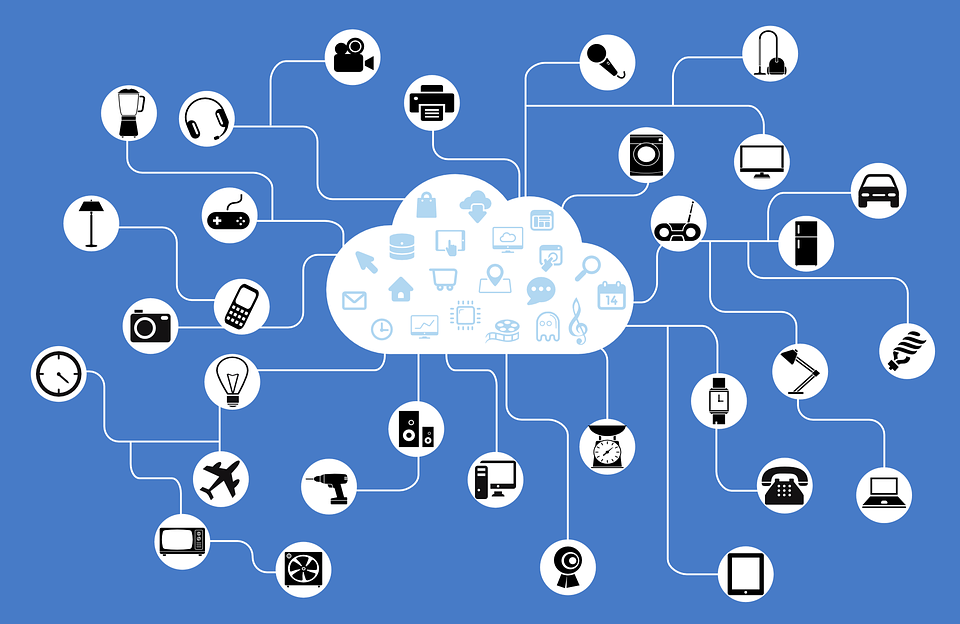
The IoT is growing at an incredible rate, and although the predictions currently coming out are probably a bit optimistic, the growth of the industry is undeniable. Tech leader Ericsson this week announced a series of innovations designed to help folks move ahead with adoption of IoT solutions.
Even though cellular networks already cover 90 percent of the globe’s populated areas, a number of roadblocks to mass-market adoption of IoT still exist, as far as Ericsson can tell. The company is addressing these challenges with a new suite of software upgrades and ecosystem advances, which according to a release will accelerate the uptake of IoT.
“We are accelerating IoT growth on existing LTE and GSM networks to ensure a global foundation for a vast range of new consumer, industry and government applications, from Smart Cities to connected farms,” said Arun Bansal, SVP and Head of Business Unit Radio, Ericsson. “With our leading national and multi-national operator customers, like SK Telecom and Orange, and ecosystem partners like Intel, we are co-creating end-to-end IoT network and device solutions that harness the power of reliable, globally scalable, standards-based systems and services. These innovations put our mobile operator customers solidly on the road to 5G.”
There are already more than 230 million cellular M2M subscriptions for IoT devices, but certain challenges have limited the potential for large-scale adoption, and Ericsson plans to address the following ones: cost of devices, device battery life, and cellular coverage in remote areas and deep inside buildings.
To do that, the company has announced its IoT Networks Software 16B solutions suite. The first challenge is cost, and the new software addresses that problem by supporting LTE Category 0 with half-duplex operation in FDD to limit functionality and capability to what is specifically required for IoT applications, such as large-scale sensor and smart meter deployments. This reduced complexity cuts device cost by 60 percent, as compared to Category 4. To extend the battery life out to meet the 10-year goal for 5G, Ericsson says two of its software upgrades will bring today’s devices up to that standard. The device power-saving mode for LTE & GSM introduces a deep sleep state to save off-use power, and the extended discontinuous reception for GSM extends the sleep cycles in inactive mode.
Image via Shutterstock For improved indoor coverage, the extended coverage software for GSM delivers a 20 dB improvement, for a seven-fold extension in the range.
“Connectivity is critical to mass adoption of new IoT applications for smart cities and industries. Intel is helping clear the path for IoT's rapid growth through its research and development of cutting-edge new technologies, and by working closely with ecosystem partners,” said Ken Stewart, Chief Wireless Technologist and Fellow, Intel Corporation. “We are pleased to collaborate with Ericsson to jointly drive standards adoption of solutions that can be used immediately on existing operator networks.”
The company, along with partner Altair Semiconductor, will demonstrate the low-power capabilities of the new solutions at Super Mobility Week. The Altair FourGee-1160 Cat-1/0 chipset is built within an Ericsson-populated PSM infrastructure, designed to optimize for battery life. PSM, as specified by 3GPP Release 12, enables terminals to enter a deep-sleep mode for long periods of time after notifying the base station.
“PSM is an excellent optimization tool for a variety of LTE power-conscious IoT applications,” said Eran Eshed, VP, Marketing and Business Development, Altair. “The FourGee-1160 is the only true Cat-1 chipset in the market today. It is now also the first to offer the PSM capability.”
“Long battery life is a key enabler for large-scale IoT adoption, and what’s typically being asked for is battery durations of 10 years or more,” said Sebastian Tolstoy, Head of Radio Marketing and Communications at Ericsson. “PSM is effectively addressing the challenge of battery life, enabling and optimizing a multitude of IoT use cases with relatively infrequent communication requirements between end points and the network.”
Edited by
Dominick Sorrentino