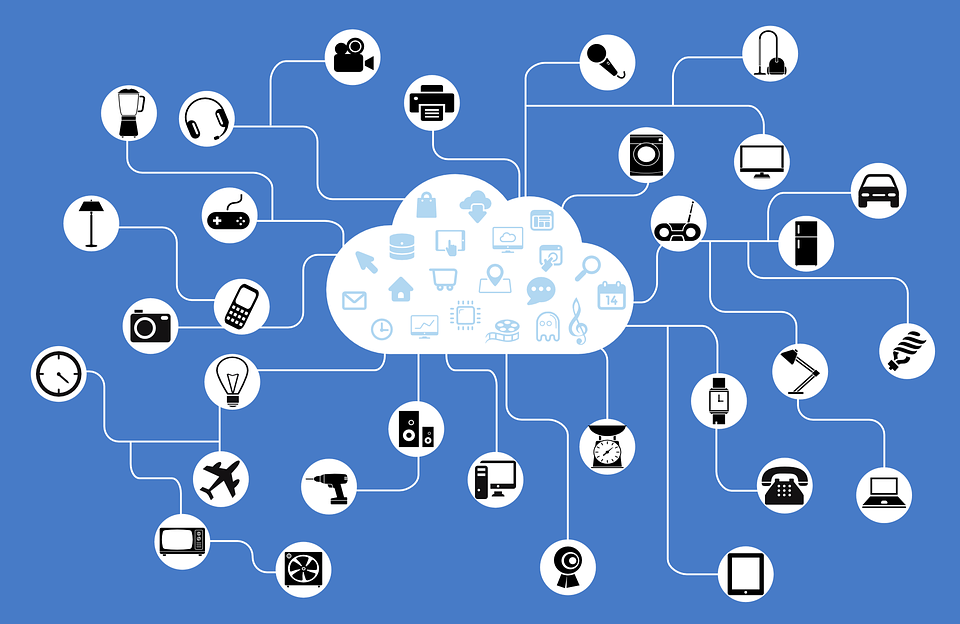
The Internet of Things hype is at its peak, according to Gartner’s 2015 Hype Cycle for Emerging Technologies. It is at the point where the hard work is about to begin. The challenges and opportunities are becoming obvious and the time is now to begin delivering scalable solutions.
How Do Manufacturers Use IoT Technologies?
Manufacturers are already spending considerable amounts of money on mobilizing the enterprise, including connecting employees, products, services and machines/vehicles. Digging deeper, we can see what functions in the business they’ve tackled first.
Ernst & Young recently reported on ways that companies use IoT technologies:
- Through mobile apps that customers use on smartphones, tablet computers or other digital devices – 46.5 percent
- In production and distribution operations to track product flow to customers – 44.9 percent
- Through digital sensors in products that send data to the company on how those products are performing – 25.5 percent
- Through digital sensors and other devices in locations where business is conducted, for example stores, branches, offices – 25.3 percent
- Through digital devices (such as digital bracelets) that customers can wear, which the company uses to track customer usage of products and services – 13.5 percent
- Do not currently use digital technologies to monitor products and customers, but plan to do so by 2020 – 10.1 percent
The fact that mobile apps are the starting point shouldn’t come as a surprise, as this is where organizations can achieve the fastest results with the smallest investment. Incorporating customized software for endpoints such as sensors and connected meters, and for connecting existing equipment and machines, immediately makes it more complicated. However, mobile applications are usually used in conjunction with standard hardware including NFC chips, beacons and connected equipment that provide information/data to the business. The mobile apps are a window and a data input mechanism for the manufacturing process.
This also aligns with the focus of many IT organizations today: improving applications to better fit the business processes.
What Are the Most Common Uses of IoT?
Here’s a quick look at some use cases for manufacturing.
Product Monitoring
A global manufacturer of indoor and outdoor environmental cleaning solutions and specialty floor coatings needed a way to consolidate and analyze their cleaning machine telemetry data, as well as make this data more actionable by delivering it to their internal management team, customers and field-based operators in real time. To accomplish this, the manufacturer had a logical architecture designed that allowed for the integration of machine data, SAP ERP data and other sources with minimal architectural impact to the client. The architecture also provided high-speed and performance movement of data from the machines to the reporting layer. This enabled the effective delivery of information that allowed them to retire maintenance-heavy legacy systems that were not scalable.
Supply Chain Monitoring
One of the largest cement and concrete companies in the world is driving innovation from various inputs (customer insights, technical innovation, local markets and business strategy). Through the use of IoT and a responsive Web portal with hybrid applications for iPhone, iPad and Android smartphones, the company is now able to track details about their customers, orders, invoices and deliveries on a daily basis. This covers all aspects of production, warehouse logistics and distribution, which has been key in increasing productivity, levels of customer service and cost savings.
Premises Monitoring
A major bakery brand with product in 20,000 stores worked with a developer to create an Android tablet application that eliminated paper-based data collection by its retail field team. This helped mobilize the business process of capturing in-store product data and equipped the team with real-time store card details, access to promotion and marketing collateral and an interactive product catalogue. Not only did this save time and create front-line efficiency, but it also updated corporate back-end systems automatically.
Key Attributes to Success in IoT Projects
With all the challenges and risks, how do you succeed with your IoT strategy and projects? To start with, as per the insights and research at the start of this paper, don’t just digitize existing business processes. Instead, think about how you can use IoT and mobile technology to transform your business.
Other key attributes of successful IoT projects are:
- Clear objectives, KPIs and measuring of results
- Short iterative projects of maximum 5 months from start to MVP (Minimum Viable Product) launch
- IoT implementations supported by lean continuous improvements
- User involvement throughout the development process
- Training and education of employees, getting everyone involved
The benefits of IoT to manufacturing are real, including better customer segmentation, better service and increased revenue. There’s no question that IoT is changing business models – for the better. However, not every IoT venture is a sure bet. It is often quite challenging to embark on an IoT project, and they may fail initially. Working with a trusted partner who can bring technical expertise to the table will help. So will choosing a smaller-scale project to start with. IoT is here, and it isn’t going away. How you approach it will likely determine the longevity of your company.
To download the entire white paper, click here.
Magnus Jern is president of DMI’s Mobile Application Solutions Division. He was previously the founder and CEO of Golden Gekko, acquired by DMI in 2013. Magnus has over 10 years of experience in content strategies, online marketing, search, location-based services, app development and mobile marketing for global consumer brands, retailers and carriers across the world.
Edited by
Ken Briodagh