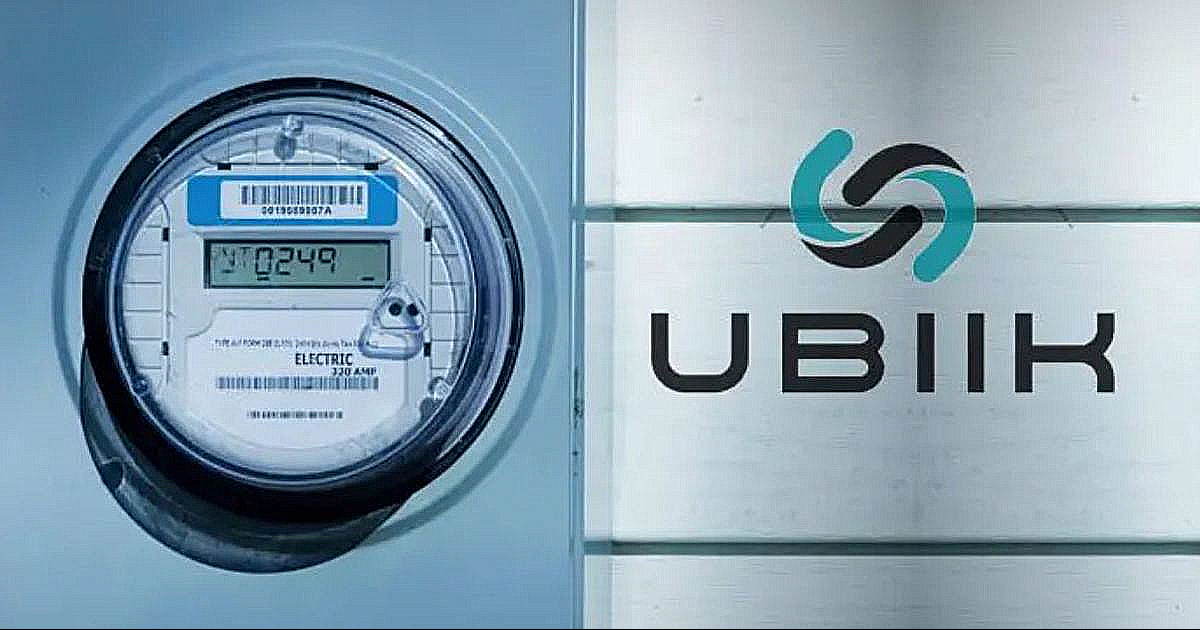
“AMI solutions to meet your needs at any scale” is the value proposition we’re looking at today, courtesy of Taiwan-based solutions provider Ubiik. (AMI, of course, being “advanced metering infrastructure.”)
Note: This is a topic we’ve dedicated coverage to over on Smart City Sentinel, too. Read here and/or here for further info.
According to (and worded simply by) IBM, AMI “is an integrated, fixed-network system that enables two-way communication between utilities and customers. The system collects, stores, analyzes and presents energy usage data, providing utility companies the ability to monitor electricity, gas and water usage in real time.” And given society’s increasingly growing needs for efficient, cost-effective, and environmentally sustainable energy (often, by way of smart tech), it comes as little surprise that AMI is a go-to for organizations.
This is what Ubiik specializes in — AMI, as well as other innovations for utilities, smart factories and more. Having started as a manufacturer of devices using LPWAN for industrial-scale, long-range IoT solutions, Ubiik now also supports 3GPP standard technologies like NB-IoT and LTE-M, providing the foundational protocols, end devices, base stations and cloud services needed for implementing IoT networks.
While on this train of thought, we have the following news:
Last week, Ubiik announced that its Pyxis LTE gateway has received FCC and ISED certification of operation in the 915 MHz license-free ISM band.
According to the official announcement, this milestone “positions Ubiik as a trailblazer in democratizing LTE for IoT applications as a future-proof, interoperable, cellular-based alternative to legacy LPWAN like LoraWAN, Amazon Sidewalk, or Wi-SUN.”
Some additional context, real quick: The Pyxis LTE router was already designed to meet utility requirements with resilient LTE-M connectivity, making it ideal for a variety of utility applications (AMI being one of them). It operates in a range of frequency bands across both private and public LTE networks, and it offers powerful edge computing capabilities and enhanced security features, to boot.
Now I’m no in-the-absolute-thick-of-it expert when it comes to some of these deeper specifics, but I’ve reviewed what experts have reported. That said, here’s another element to this scoop:
Ubiik’s FCC certification has also extended certification of Ubiik’s freeRAN base station to support legacy LTE technologies (e.g. Cat-1), in addition to Release 14 Cat-M1.
Put all this together, and you can see how Ubiik is working to bridge the gap between public cellular networks and private IoT solutions, enabling businesses to deploy high-performance private LTE networks while maintaining seamless interoperability with public LTE infrastructure. This unlocks opportunities for IoT go-tos like AMI, asset tracking, etc.
So in a nutshell, by leveraging the unlicensed 915 MHz band, Ubiik’s Pyxis LTE edge routers and Ubiik’s freeRAN base stations, “quote, eliminate the need for expensive spectrum licenses, enabling enterprises of all sizes to build and operate private LTE networks.”
For traditional IoT and smart city-centric use cases (and even industrial IoT, or IIoT), this is good news. As Fabien Petitgrand, Ubiik’s CTO, described, “The ability to deploy LTE and 5G LPWA in the 915 MHz license-free spectrum is a game-changer for the IoT ecosystem. Being able to freely operate a 100% 3GPP standards-compliant LTE and 5G LPWA network offers a unique solution to leverage both public and private infrastructure to guarantee the quality-of-service and coverage while optimizing the total deployment cost.”
Ubiik has a lot of resources to peruse. IoT readers interested can start
here.
Edited by
Greg Tavarez